Whiteout Survival Hero Guide: Rarity, Classes, Skills, and 2026 Strategy
Whiteout Survival hero guide: pick Mythic heroes, master rarity, classes, and subclasses for a dominant 2026 roster.
In the frozen wasteland of Whiteout Survival, heroes are not merely collectible portraits. They are the beating heart of every settlement, the sharp edge of every rally, and the quiet engine behind every resource run. They gather, build, train, and fight, turning a fragile camp into a fortress that can withstand Polar Terrors, beast hunts, State versus State clashes, and Arena showdowns. As of 2026, with nine generations of Mythic heroes in play, the question is no longer whether a commander needs a strong roster. The question is which heroes deserve scarce shards, skill manuals, and gear.
Rarity: The First Filter
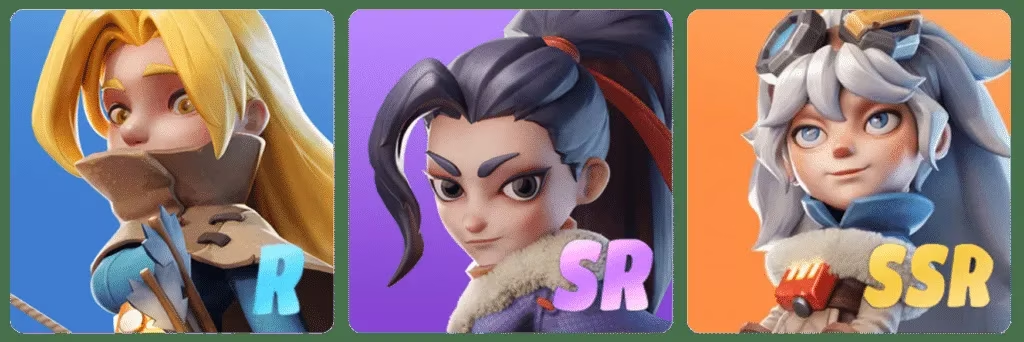
Rarity in Whiteout Survival is a promise and a warning. It signals base stats, skill count, and long-term potential. The banner color tells the story.
| Rarity | Banner | Skills | Best For |
|---|---|---|---|
| Rare | Blue | 2 Exploration, 2 Expedition | Early game, basic roles |
| Epic | Purple | 3 Exploration, 2 Expedition | Free-to-play cores, mid-game |
| Mythic | Gold | 3 Exploration, 3 Expedition | PvP, high-end PvE |
Make no mistake: Mythic heroes are the most coveted. Yet a fully upgraded Epic hero can sometimes outperform a half-built Mythic. In plain terms, a free-to-play commander may get more value from maxing a few reliable Epic heroes than from scattering resources across every shiny gold portrait. New generations arrive with better stats and skills, often pushing older heroes out of the top meta. Still, early-generation heroes remain useful if they are accessible, already leveled, and suited to a specific role.
Classes: A Frozen Game of Rock-Paper-Scissors
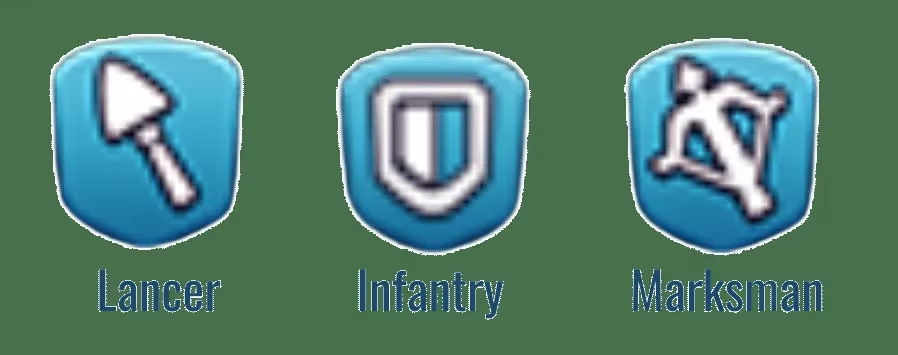
The wasteland does not forgive ignorance. Each hero belongs to a Class, shown by an icon beside the portrait. That Class decides the troops they command and the bonuses they provide.
| Class | Troop Type | Strong Against | Weak Against | Notable Heroes |
|---|---|---|---|---|
| Lancer | Spear and Lancer troops | Marksman | Infantry | Molly, Philly, Patrick |
| Infantry | Shield and Infantry troops | Lancer | Marksman | Sergey, Natalia, Jeronimo, Wu Ming |
| Marksman | Crossbow and Marksman troops | Infantry | Lancer | Bahiti, Gina, Greg, Jasser, Cloris |
During Exploration stages, heroes fight without troops, and their Class determines the type of escorts that join them. A Lancer hero brings Lancer escorts. In Expedition battles, such as rallies against other players or Polar Terrors, a Marksman hero buffs Marksman troops. This interplay adds a layer of strategy to every lineup.
Sub Classes: Growth or Combat?
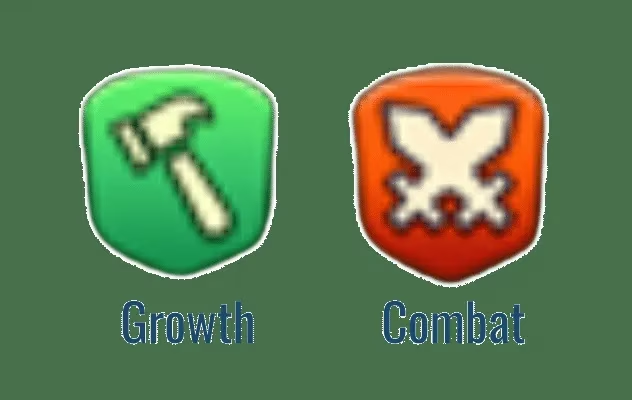
Sub Classes reveal a hero's primary duty in the settlement. The icon next to the Class icon shows whether the hero is built for the battlefield or the city.
-
Growth (Hammer): Economy, gathering speed, construction, research, and training efficiency. Example: Zinman.
-
Combat (Crossed Swords): Attack boosts, damage reduction, and debuffs. Example: Molly.
Using a Growth hero as a rally captain is like asking a carpenter to lead a cavalry charge. Using a Combat hero for gathering wastes their talents. There is no shame in building separate teams for separate jobs.
Skills: The Real Difference Makers
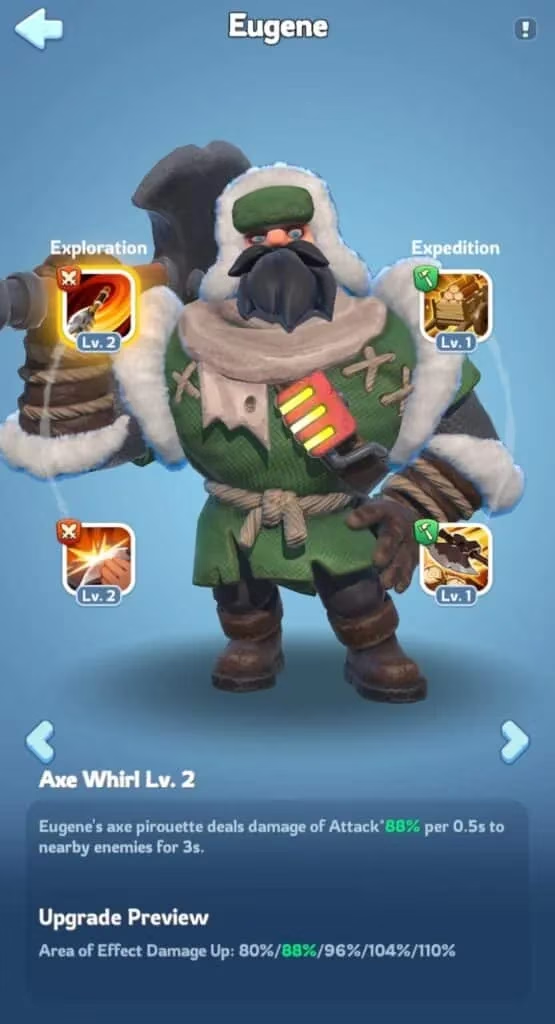
Skills are the soul of each hero. They affect city development, resource collection, combat power, and battlefield control.
Two skill types matter: Exploration skills activate in hero-only modes like Exploration stages and Arena. Expedition skills activate when heroes lead troops in rallies, Polar Terror attacks, or beast hunts.
Some skills are chance-based and can be unreliable. Stun skills disrupt enemy actions, especially in Arena. Skill synergy can turn two average heroes into a devastating pair. Pairing an attack-damage booster with an attack-speed booster is a classic example.
Acquiring Heroes and Shards
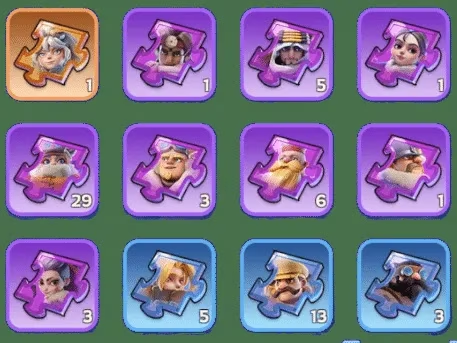
Hero shards unlock and ascend heroes. In 2026, the main paths remain familiar but still demanding.
-
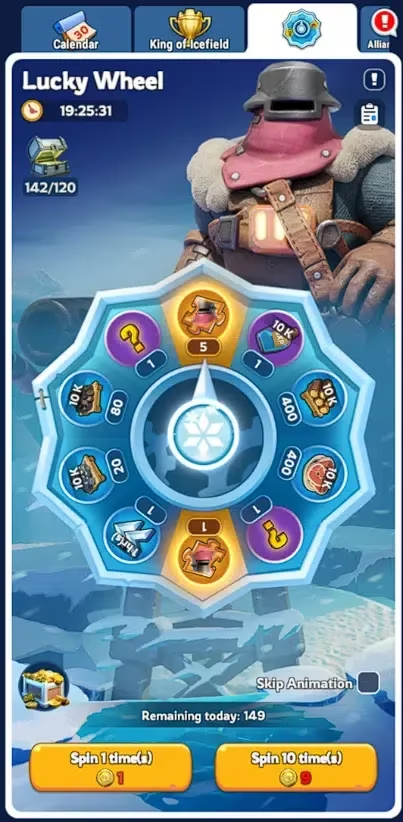
🎡 Lucky Wheel: A chance at high-rarity heroes, often one specific Mythic per generation.
-
🎴 Hero Recruitment: Uses General Hero shards or specific hero shards.
-
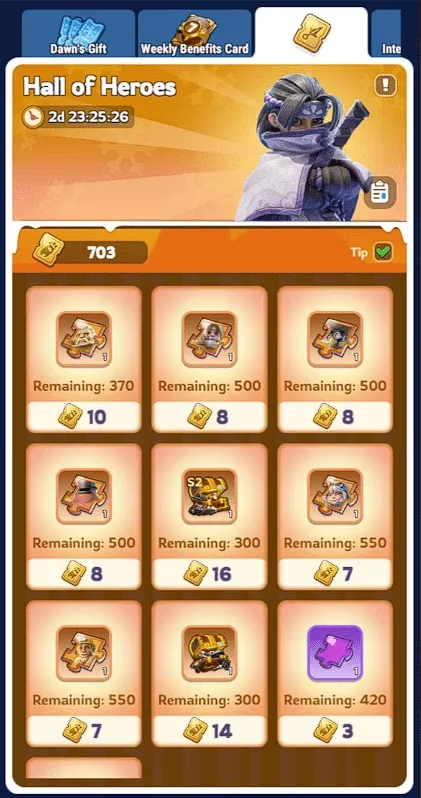
🏛️ Hall of Heroes: Compete for leaderboard ranks and shard rewards.
-
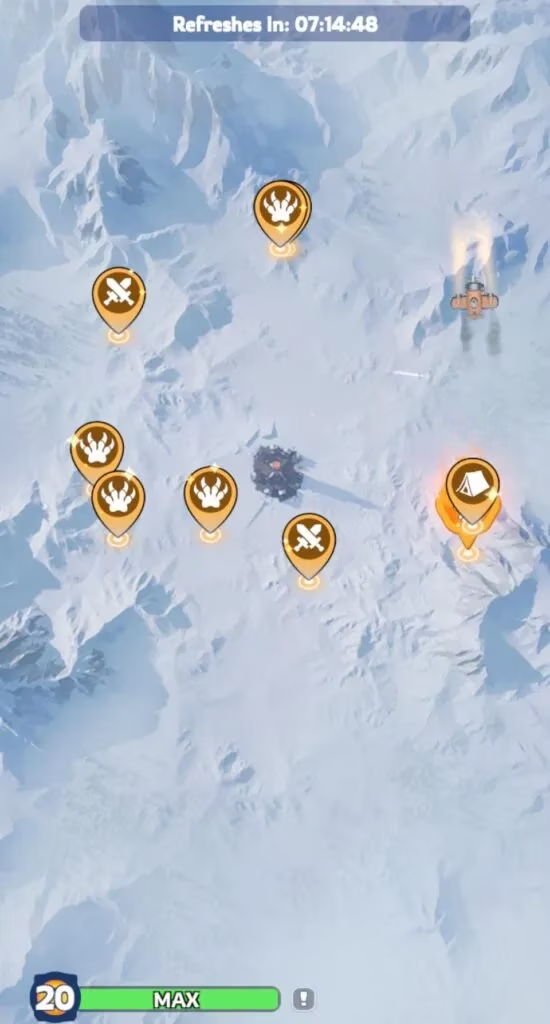
🗂️ Intel Missions: Daily source of shards, Skill Manuals, and hero experience.
-
🎉 Events: Rotating events offer targeted shard opportunities.
Mythic Generations at a Glance
| Generation | Mythic Heroes |
|---|---|
| Generation 1 | Natalia, Jeronimo, Molly, Zinman |
| Generation 2 | Flint, Philly, Alonso |
| Generation 3 | Logan, Mia, Greg |
| Generation 4 | Ahmose, Reina, Lynn |
| Generation 5 | Hector, Norah, Gwen |
| Generation 6 | Wu Ming, Renee, Wayne |
| Generation 7 | Edith, Gordon, Bradley |
| Generation 8 | Gatot, Sonya, Hendrik |
| Generation 9 | Magnus, Fred, Xura |
Rare heroes include Smith, Eugene, Charlie, and Cloris. Epic heroes include Sergey, Jessie, Patrick, Walis Bokan, Ling Shuang, Gina, Bahiti, Jasser, and Seo-yoon. These lower-rarity heroes can still fill gaps, especially for newer states or free-to-play accounts.
Roster Priorities for 2026
By 2026, Generation 9 heroes such as Magnus, Fred, and Xura define the top of the meta. Yet the best roster is not always the newest roster. It is the roster a commander can actually build.
Free-to-play players should prioritize accessible Epic heroes and one or two Mythic heroes from Lucky Wheel or events. Pay-to-play players can chase generation leaders, but they should still respect Class balance and Sub Class roles. A team of five Mythic attackers without Infantry resilience may collapse in PvP. A rally captain with Growth skills may waste an entire march.
Gear, skill levels, and star rank matter as much as rarity. A maxed Epic hero with optimal gear can carry early and mid-game content. A partially built Mythic hero may sit on the bench until enough shards arrive.
Engaging in Arena, Intel Missions, and events builds resources over time. Whiteout Survival rewards persistence, adaptation, and strategic decision-making. The frozen world has a cruel sense of humor, but preparation softens the punch.
Final thought: heroes are tools, but they are also characters with roles, strengths, and limits. Understand rarity, Class, Sub Class, and skills. Invest with purpose. The rest is a matter of patience, timing, and a little luck.
Comments