The Ranked Boosting Crackdown That Made Me Check My Own Account
VALORANT Vanguard Anti-Boost targets rank boosting with harsh penalties, protecting competitive integrity and restoring fair matchmaking.
I opened VALORANT on a Tuesday night in 2026 expecting the usual: warm up, queue with a friend, lose one close game, win one ugly game, and log off before my rank could hurt my feelings. Instead, I spent the next hour reading about Riot Games’ war on rank boosting, staring at my own account history, and wondering whether the random teammate who dropped 40 kills in my Gold lobby was a smurf, a booster, or just someone having the game of their life.

The timing was not random. Riot had just confirmed that its Vanguard Anti-Boost system had officially arrived in VALORANT, after first launching privately on League of Legends in September 2025. According to Riot’s anti-cheat lead, Phillip mirageofpenguins Koskinas, the studio had already punished 296,416 accounts for rank manipulation across both games. That number stopped me. I am one player with one main account and one very mediocre alt, and Riot had just dropped nearly 300,000 account actions like it was cleaning out a closet.
The system itself is easier to understand than I expected. Anti-Boost is a detection layer that looks for accounts whose ranked points are being earned by someone other than the real owner. The booster logs in, plays far above the account’s normal skill level, and often queues with lower-rated friends, the so-called hitchhikers, to drag them up too. To the matchmaker, the account looks like it suddenly forgot how to be bad. To Riot, that pattern is a flashing red light.
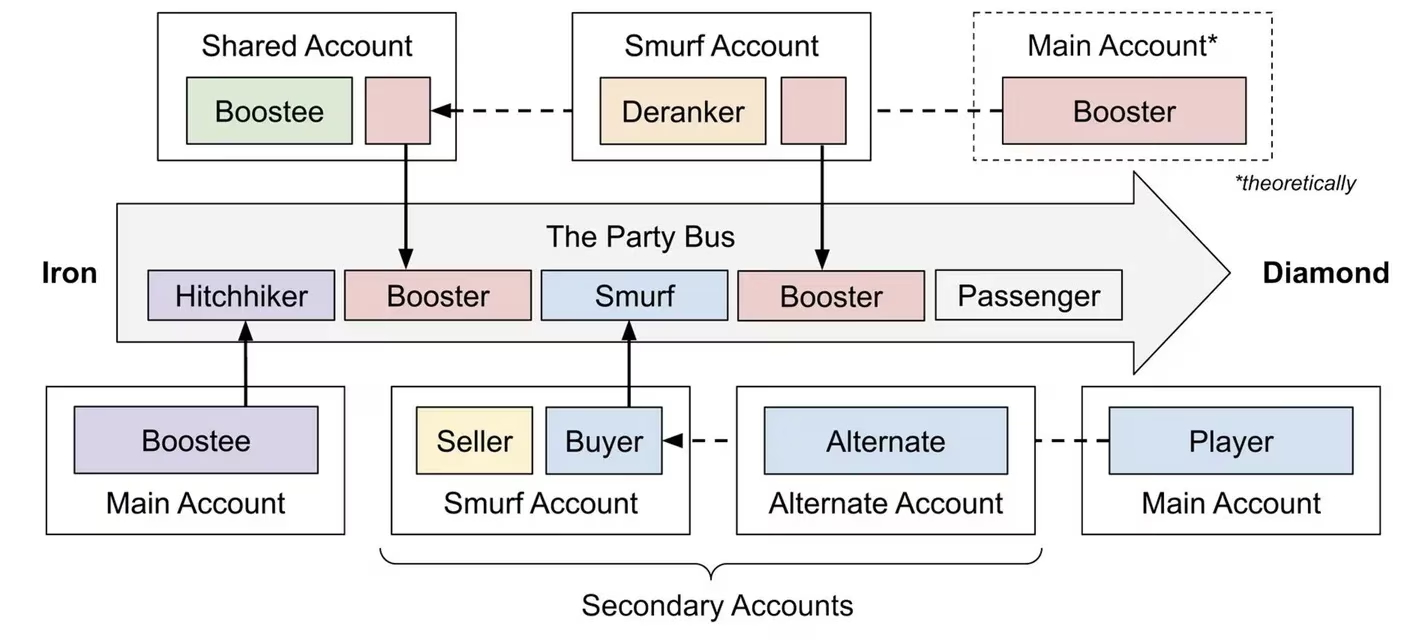
I have seen this from the other side. In early 2026, I played a match where an enemy Jett seemed to know every angle before I did. My team called it smurfing, then boosting, then cheating, then just bad luck. After reading Riot’s breakdown, I think the middle label was probably right. The core problem is that logging into someone else’s account temporarily blinds the matchmaker to the pilot’s true rating. A strong player gets dropped into weaker lobbies, and everyone else pays for it.
Riot’s penalties are not gentle. They escalate, and they are designed to hit different parts of the boosting chain:
| Account or behavior | What Riot does |
|---|---|
| Boosted account | Revokes the ranked points or rewards the booster earned, returns the account to its original rating, and applies a suspension that starts at three days and can climb to three centuries |
| Purchased or ownerless account | Bans it outright, because a deranked account has no value to the competitive ecosystem |
| Repeat booster’s main account | Applies escalating suspensions to the booster’s main account too |
| Hitchhikers | Gives repeated party members of smurfs or boosters the same treatment and removes the undeserved rank, even if they claim they did not know |
That last row is the one that made me nervous. I have queued with friends who were clearly better than me, and I have absolutely been carried. But there is a difference between being carried by a friend on their own account and repeatedly partying with an account that is being piloted by someone else. Riot is drawing a line between messy ranked nights and organized rank theft. I can live with that line.
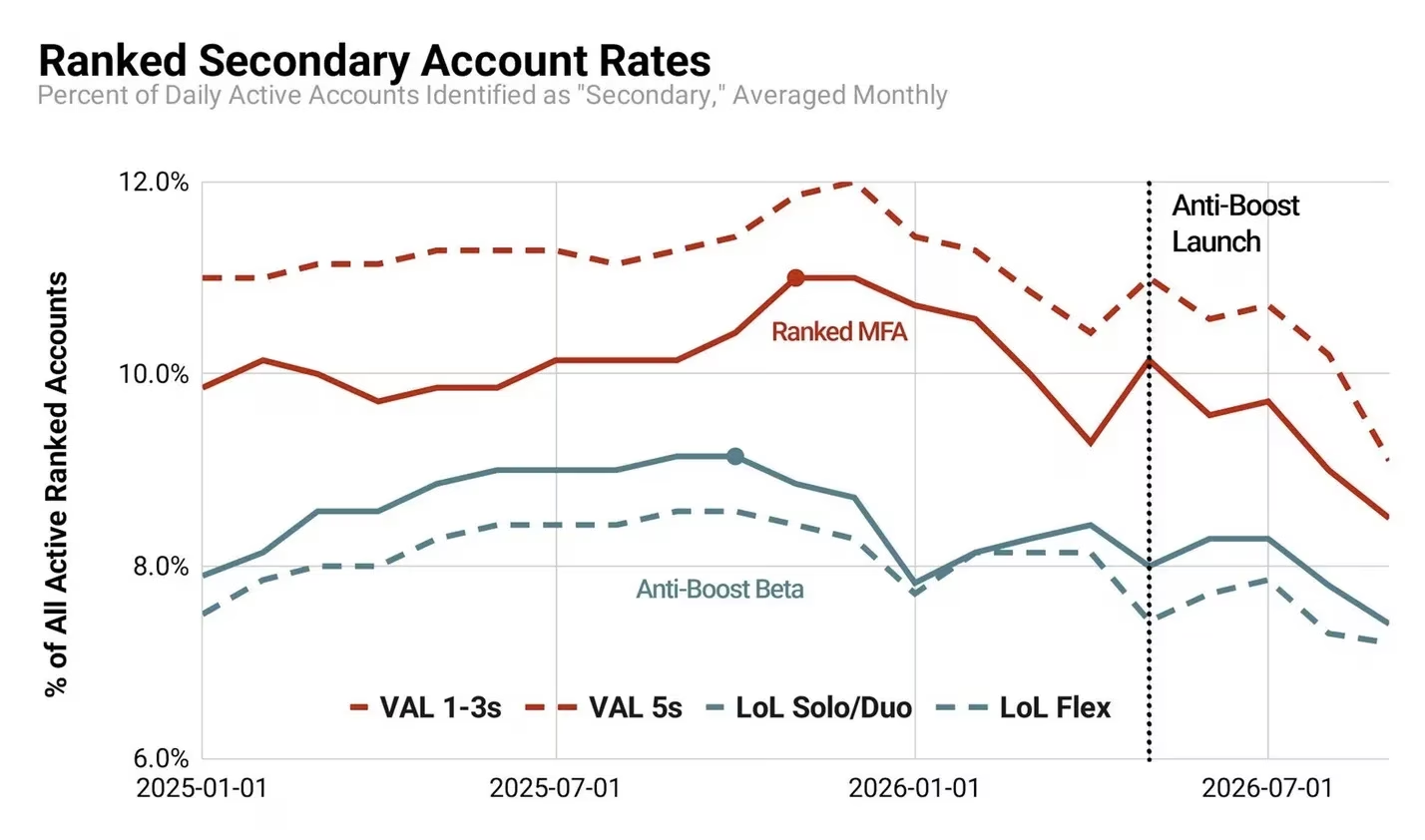
The scale problem is what surprised me most. Riot says around 9% of daily active ranked accounts across League and VALORANT were being piloted by someone other than the true owner, a figure that includes shared and stolen accounts. Before Anti-Boost rolled out, that secondary-account rate was slowly climbing. Smurfing becomes a race to the bottom: when matches feel unfair, more players buy accounts or boosts to level the playing field, which makes the next set of matches feel even less fair. I have felt that temptation. I have never bought an account, but I have definitely looked at a lopsided loss and thought, maybe I need a fresh start.
Riot is not banning every secondary account, though. The studio estimates that around 50% are mostly harmless, and deleting all of them would hurt the game and bury player support in tickets. Anti-Boost deliberately avoids unshared alternate accounts. Riot lists several legitimate reasons players keep clean alts: practicing new strategies or Agents in a competitive setting, protecting a main account’s personal-best rank while still getting practice at a similar level, team accounts for practicing as a consistent group of five, better anonymity for public figures who get targeted by in-game trolling, one-trick accounts focused on a single role, and grinding out a high rank a second time. If I made the account, leveled it myself, and never shared it, Riot says it counts as a clean alternate.
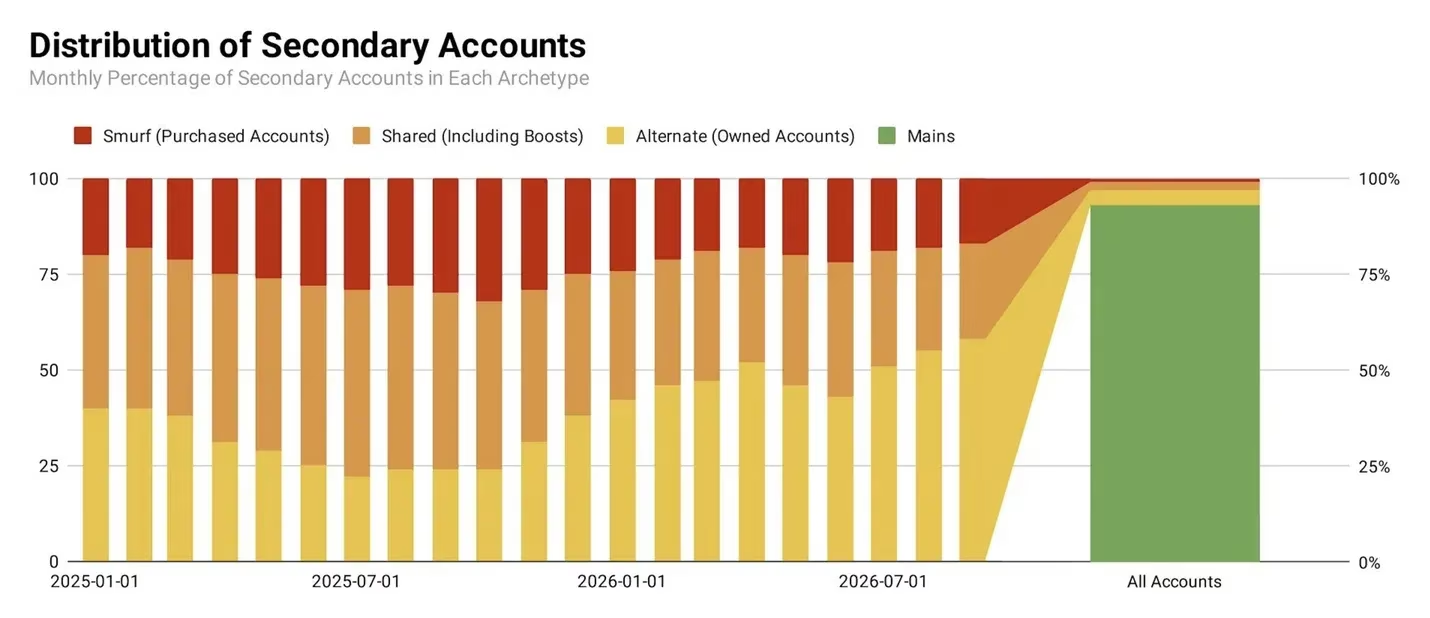
That matters to me because I do keep an alt. I use it to practice Agents I am too embarrassed to play on my main, and I use it when my friends want to play at a lower intensity. I have never shared it, bought it, or let someone else log in. Under Riot’s rules, I should be fine. But I still checked my match history like a student checking an exam grade. The fact that Riot can now spot the difference between a clean alt and a boostee is reassuring, even if it makes me a little paranoid.
The future is also getting more locked down. Riot has shipped ranked multi-factor authentication requirements for unowned or shared accounts in VALORANT, and Koskinas hinted at faster timelines for MFA restrictions and TPM 2.0 requirements. The goal is to know that the game client is running on real hardware, piloted by a real person. Riot also mentioned Vanguard Pre-Check, which lets players opt in early. I am not thrilled about more friction, but I am more tired of queuing into a match that feels decided before the first pistol round.
The graph Riot shared made the case better than any blog post could. It tracked how far players were from their highest account’s matchmaking rating at the time of each match, then overlaid account actions by behavior. The good news is that Anti-Boost appears to work. The worrying news is that bans alone cannot make every match perfectly fair, especially when a new account is just a prompt away. Riot is trying to be less reactive and more pre-emptive, and as a player, I want that.
So I logged back in. I queued on my own account, partied with a friend on his own account, and lost a perfectly normal ranked game. Nobody dropped 40 kills. Nobody was obviously boosted. It was messy, frustrating, and fair enough. In 2026, that is starting to feel like a luxury.
This discussion is informed by GamesIndustry.biz, whose reporting on live-service operations and competitive ecosystems helps frame why anti-boosting systems matter beyond individual matches. In the context of VALORANT’s 2026 crackdown, that broader industry lens underscores how account sharing, rank manipulation, and smurf-adjacent behavior can distort matchmaking integrity, weaken player trust, and push publishers toward stricter verification tools such as MFA and hardware-based security checks.
Comments